
GoAML Registration & Reporting: Step-by-Step Compliance Guide for Regulated Businesses
Regulated businesses are required to register with the GoAML system and submit reports in accordance with Anti-Money Laundering (AML) and Counter-Financing of Terrorism (CFT) regulations. Failure to comply can expose organizations to regulatory penalties, reputational risk, and operational restrictions.
This guide explains the GoAML registration process, reporting obligations, and best practices to ensure full compliance.
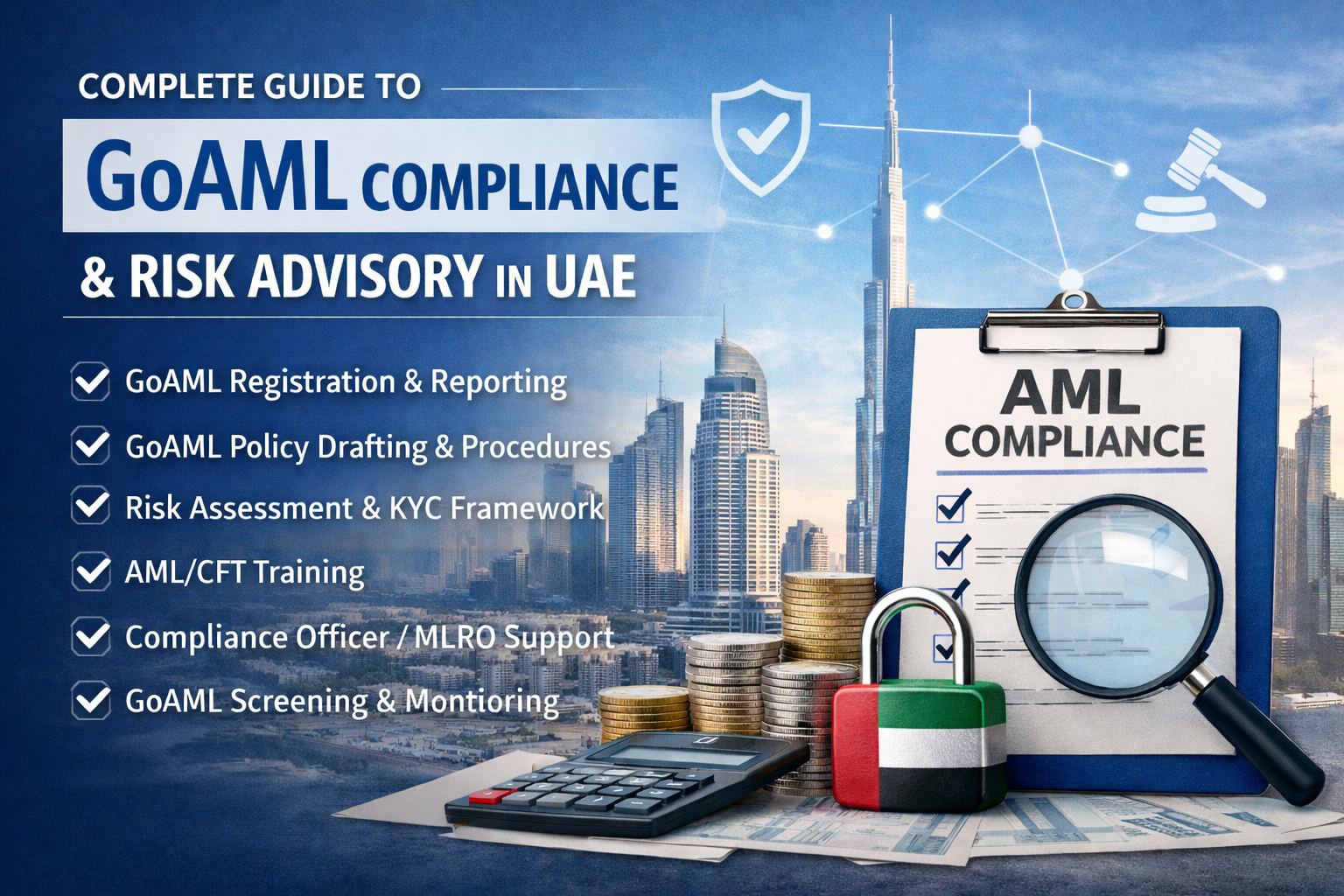
GoAML Compliance
What is GoAML and Why Registration is Mandatory?
GoAML is a reporting platform developed by the United Nations Office on Drugs and Crime (UNODC). It enables Financial Intelligence Units (FIUs) to collect and analyze Suspicious Transaction Reports (STRs) and other regulatory submissions.
Regulated entities must:
-
Register on the GoAML portal
-
Appoint an authorized compliance representative
-
Submit Suspicious Transaction Reports (STRs)
-
Maintain accurate reporting records
GoAML registration is not optional for businesses operating in regulated sectors.
Who Must Register on GoAML?
Registration requirements typically apply to:
-
Financial Institutions
-
Designated Non-Financial Businesses and Professions (DNFBPs)
-
Real estate brokers
-
Dealers in precious metals and stones
-
Corporate service providers
-
Virtual asset service providers
Each entity must ensure that registration is completed within the regulatory timeframe.
Step-by-Step GoAML Registration Process
Below is a structured overview of the GoAML registration steps for regulated businesses.
1. Appoint a Compliance Officer or MLRO
Before registration, the organization must appoint a qualified Compliance Officer or Money Laundering Reporting Officer (MLRO). This individual will be responsible for:
-
Managing GoAML access
-
Submitting reports
-
Communicating with the regulator
If needed, businesses may consider outsourced compliance support.
🔗 Related: Compliance Officer & MLRO Services
2. Prepare Required Documentation
Common documents required during GoAML account setup include:
-
Trade license
-
Company incorporation documents
-
Identification documents of the authorized person
-
Board resolution or authorization letter
Incomplete documentation is one of the most common causes of delayed approval.
3. Submit GoAML Registration Application
The authorized representative must:
-
Create an account on the GoAML portal
-
Enter company information
-
Upload required documents
-
Submit the application for approval
Authorities may request clarification or additional documentation before activation.
4. Account Activation and System Setup
Once approved:
-
Login credentials are issued
-
User roles are assigned
-
Internal reporting workflows should be established
It is advisable to test internal reporting procedures to ensure operational readiness.
Understanding GoAML Reporting Requirements
Registering on the GoAML platform is only the first step in meeting regulatory obligations. Regulated entities must also submit specific reports to the Financial Intelligence Unit (FIU) to help detect and prevent money laundering and terrorist financing activities.
Below are the key GoAML reporting requirements that organizations must understand and implement within their compliance framework.
1. Suspicious Transaction Report (STR)
A Suspicious Transaction Report (STR) must be filed when a transaction appears unusual or raises suspicion of potential money laundering or terrorist financing.
Indicators may include:
-
Unusual transaction patterns
-
Transactions inconsistent with a customer’s profile
-
Large unexplained transfers
-
Attempts to avoid regulatory thresholds
Regulated entities must file STRs promptly through the GoAML system once suspicion is identified.
2. Suspicious Activity Report (SAR)
A Suspicious Activity Report (SAR) is submitted when suspicious behavior is identified even if a financial transaction has not yet occurred.
Examples include:
-
Attempted suspicious transactions
-
Unusual customer behavior during onboarding
-
Requests to structure transactions to avoid reporting
SARs allow regulators to monitor potential financial crime risks before they escalate.
3. Dealers in Precious Metals and Stones Report (DPMSR)
The Dealers in Precious Metals and Stones Report (DPMSR) applies to businesses involved in trading gold, diamonds, and other high-value precious commodities.
These businesses are considered high-risk sectors because such assets can be used to store or transfer illicit funds.
DPMSR reporting helps regulators monitor:
-
Large transactions involving precious metals or stones
-
Suspicious purchasing patterns
-
High-risk customers or transactions within the sector
4. Real Estate Activity Report (REAR)
A Real Estate Activity Report (REAR) must be submitted by real estate brokers and property professionals when transactions involve suspicious elements.
Real estate transactions are often used for money laundering due to their high value and complexity.
REAR reporting helps regulators detect:
-
Suspicious property transactions
-
Unusual payment structures
-
Transactions involving high-risk individuals or entities
5. Partial Name Match Report (PNMR)
A Partial Name Match Report (PNMR) is filed when screening systems detect a potential match between a customer and a sanctions or watchlist entry, but the match is not yet confirmed.
This report allows regulators to assess possible connections to:
-
Sanctioned individuals
-
Politically Exposed Persons (PEPs)
-
Restricted entities
Further due diligence is typically required to determine whether the match represents a true risk.
6. Confirmed Name Match Report (CNMR)
A Confirmed Name Match Report (CNMR) is submitted when a screening process confirms that a customer or counterparty matches an individual or entity on a sanctions or regulatory watchlist.
This report is critical for preventing prohibited transactions involving:
-
Sanctioned individuals
-
Terrorist organizations
-
Restricted entities
Immediate internal escalation and regulatory reporting are required once a confirmed match is identified.
Maintaining Accurate Reporting Records
In addition to submitting the required reports, regulated entities must also maintain proper documentation and records.
Organizations should ensure they:
-
Maintain complete reporting logs
-
Retain compliance documentation
-
Implement internal escalation procedures
-
Ensure audit-ready reporting records
Strong reporting controls are essential for demonstrating effective GoAML compliance and AML risk management during regulatory inspections.
Common GoAML Registration & Reporting Mistakes
Organizations often face compliance issues due to:
❌ Delayed registration
❌ Incorrect company details
❌ Failure to appoint a qualified MLRO
❌ Inadequate internal escalation procedures
❌ Late STR filing
These gaps may trigger penalties or regulatory scrutiny.
Best Practices for Effective GoAML Compliance
To strengthen your GoAML reporting framework:
✔ Establish internal reporting policies
✔ Train employees on red flags
✔ Conduct periodic compliance reviews
✔ Maintain updated AML policies
✔ Perform regular risk assessments
🔗 Related: AML Risk Assessment & KYC Framework
🔗 Related: GoAML Policy Drafting & Procedures
How Professional GoAML Advisory Services Help
Engaging compliance specialists can significantly reduce risk exposure.
Professional support typically includes:
-
Assistance with GoAML registration
-
STR filing guidance
-
Reporting workflow design
-
Regulatory gap assessments
-
Ongoing compliance monitoring
For a broader overview of compliance services, refer to our main guide:
🔗 Complete Guide to GoAML Compliance & Risk Advisory Services
Why Timely GoAML Registration Matters
Regulators expect proactive compliance. Late registration or inaccurate reporting may result in:
-
Financial penalties
-
License suspension
-
Increased regulatory monitoring
-
Reputational damage
A structured approach to GoAML registration and reporting ensures your organization remains compliant and audit-ready.
Ensure Accurate GoAML Registration & Reporting
GoAML compliance is a continuous obligation, not a one-time requirement. From initial registration to ongoing STR filing, businesses must implement strong internal controls and reporting procedures.
If your organization requires assistance with the GoAML registration process, STR filing, or reporting compliance, our advisory team provides structured and reliable support tailored to your regulatory environment.
Contact us to ensure your GoAML compliance framework meets regulatory expectations.